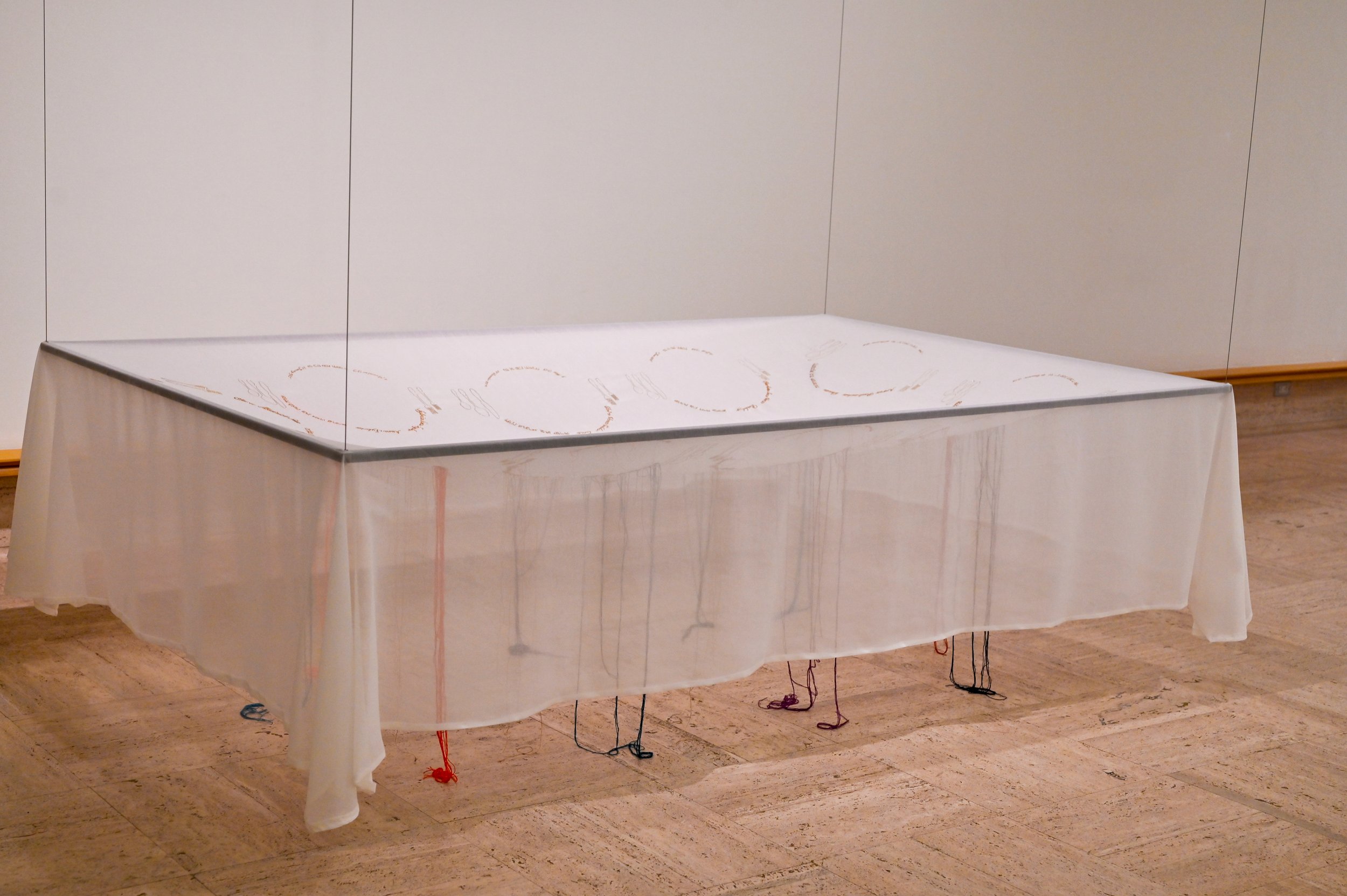
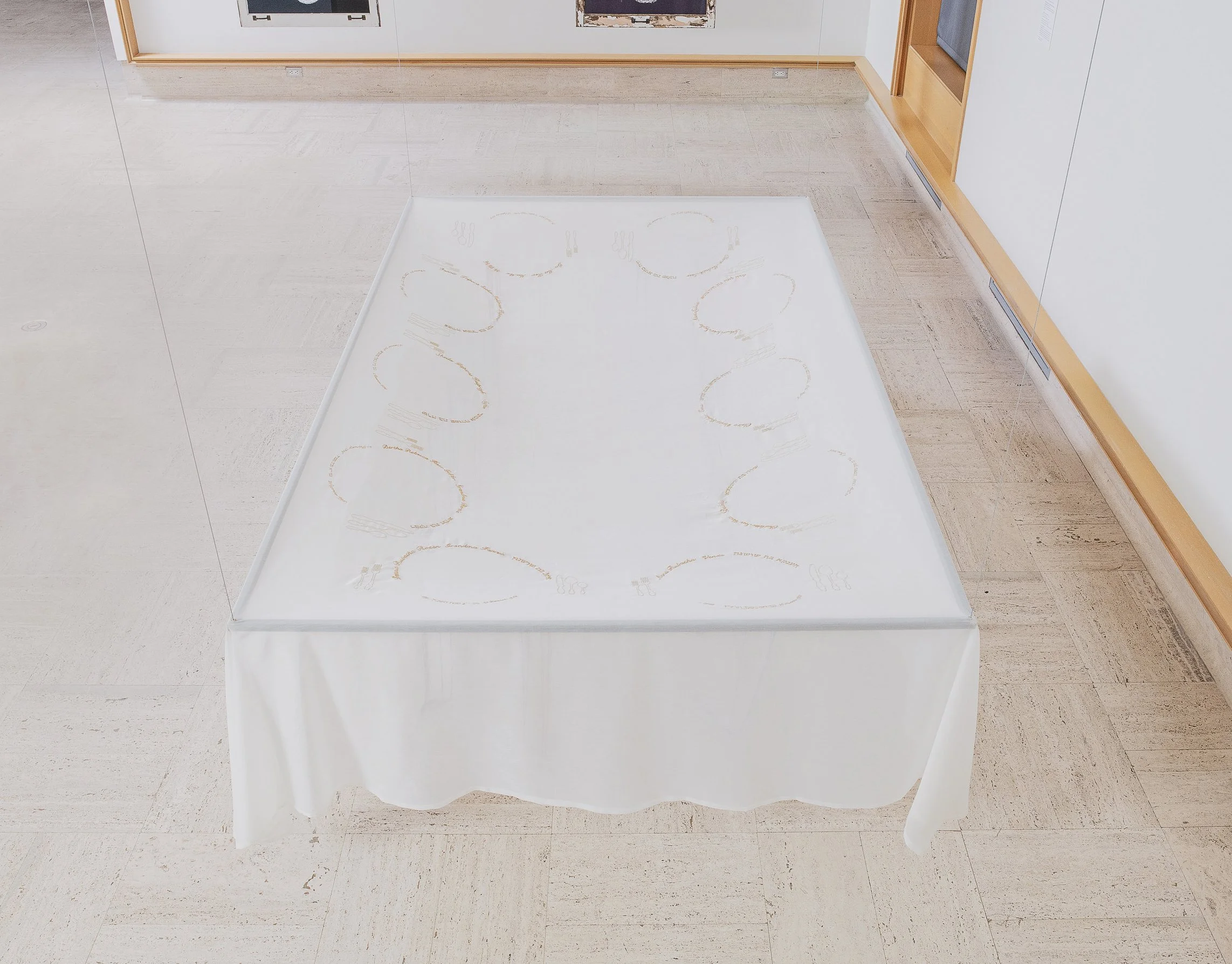
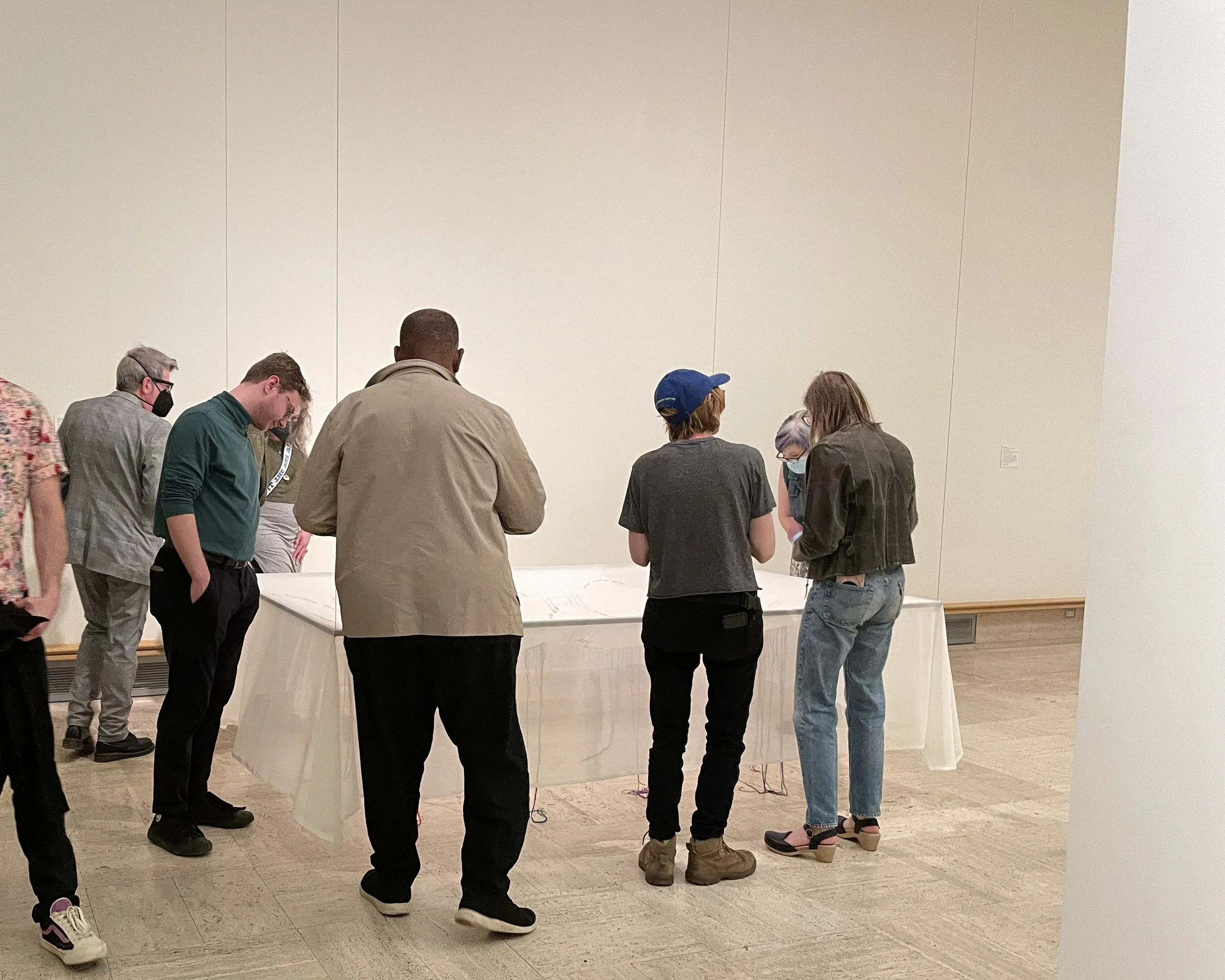
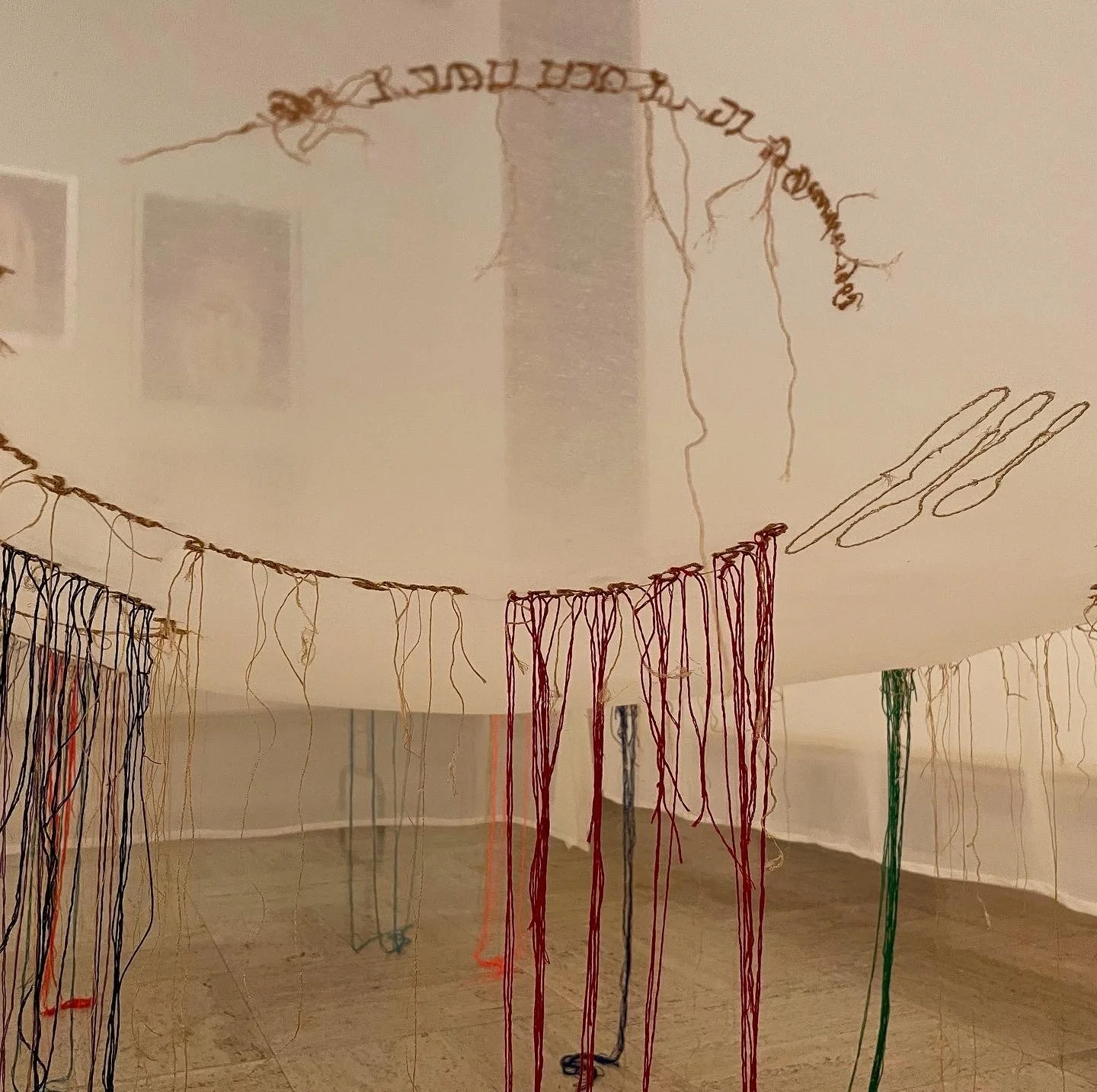
TEFILAT NASHIM (SIT! SIT! MY EXALTED GUESTS, USHPIZATA* ILA’ATA), 2022
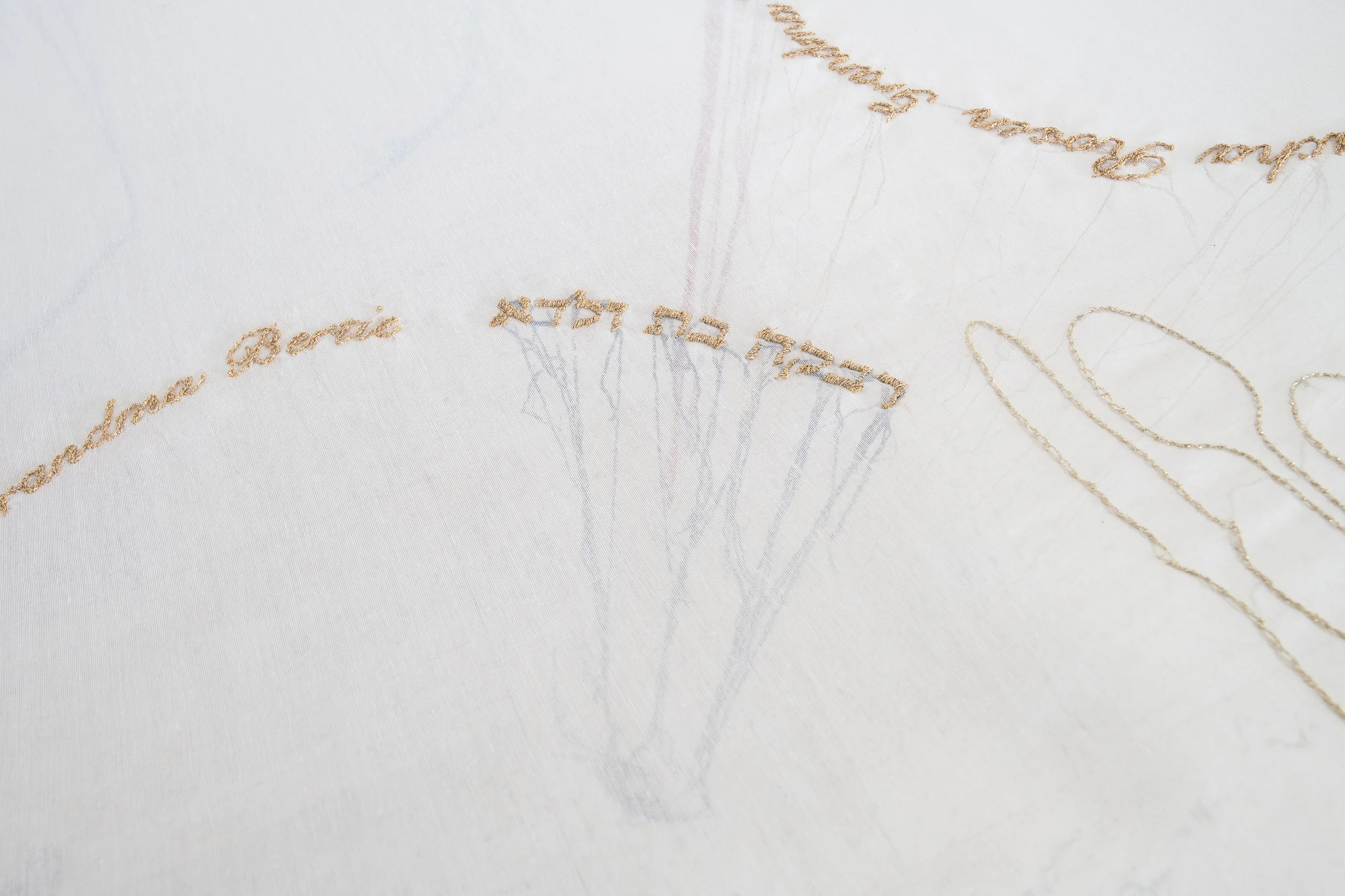
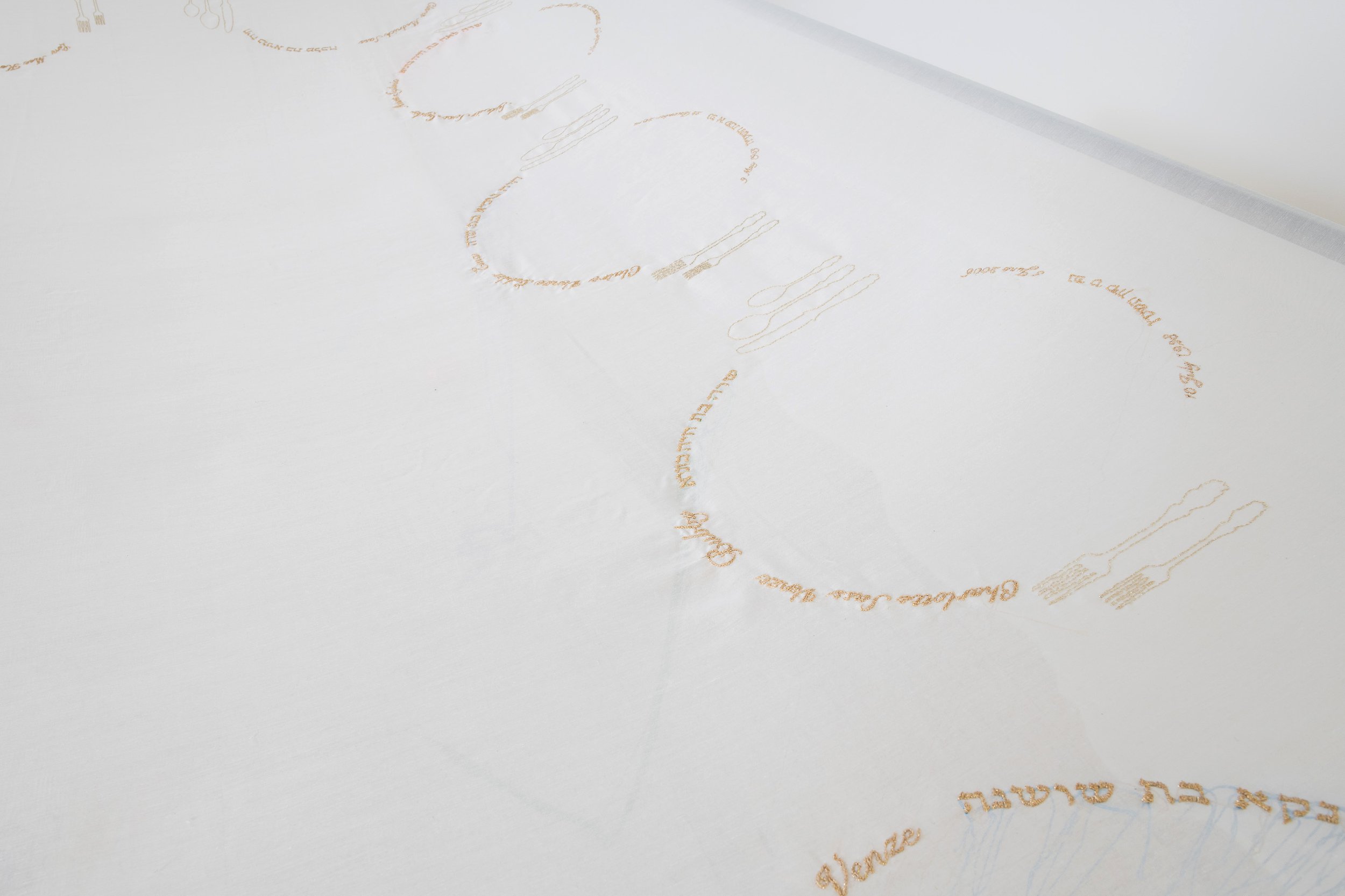
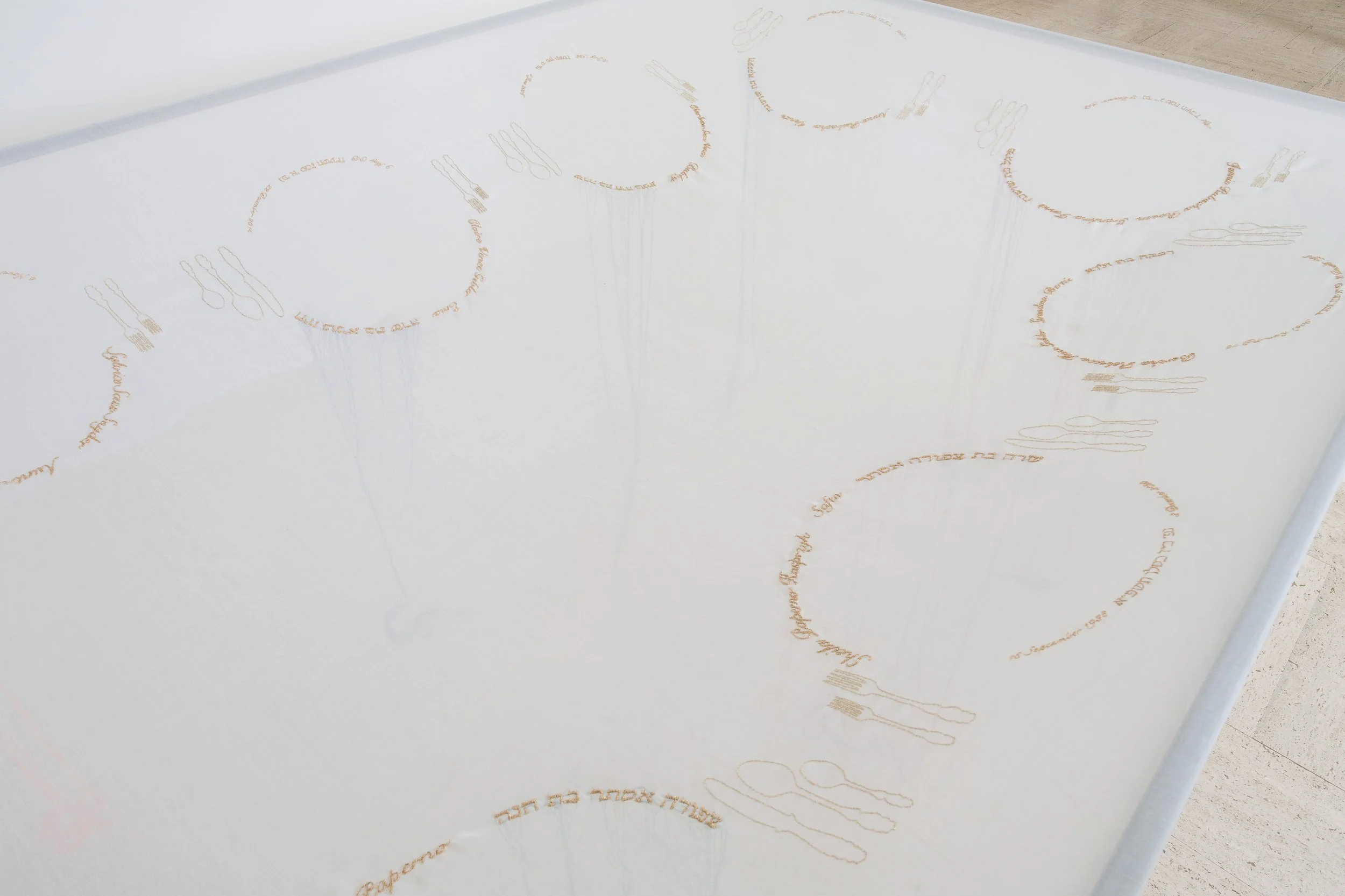
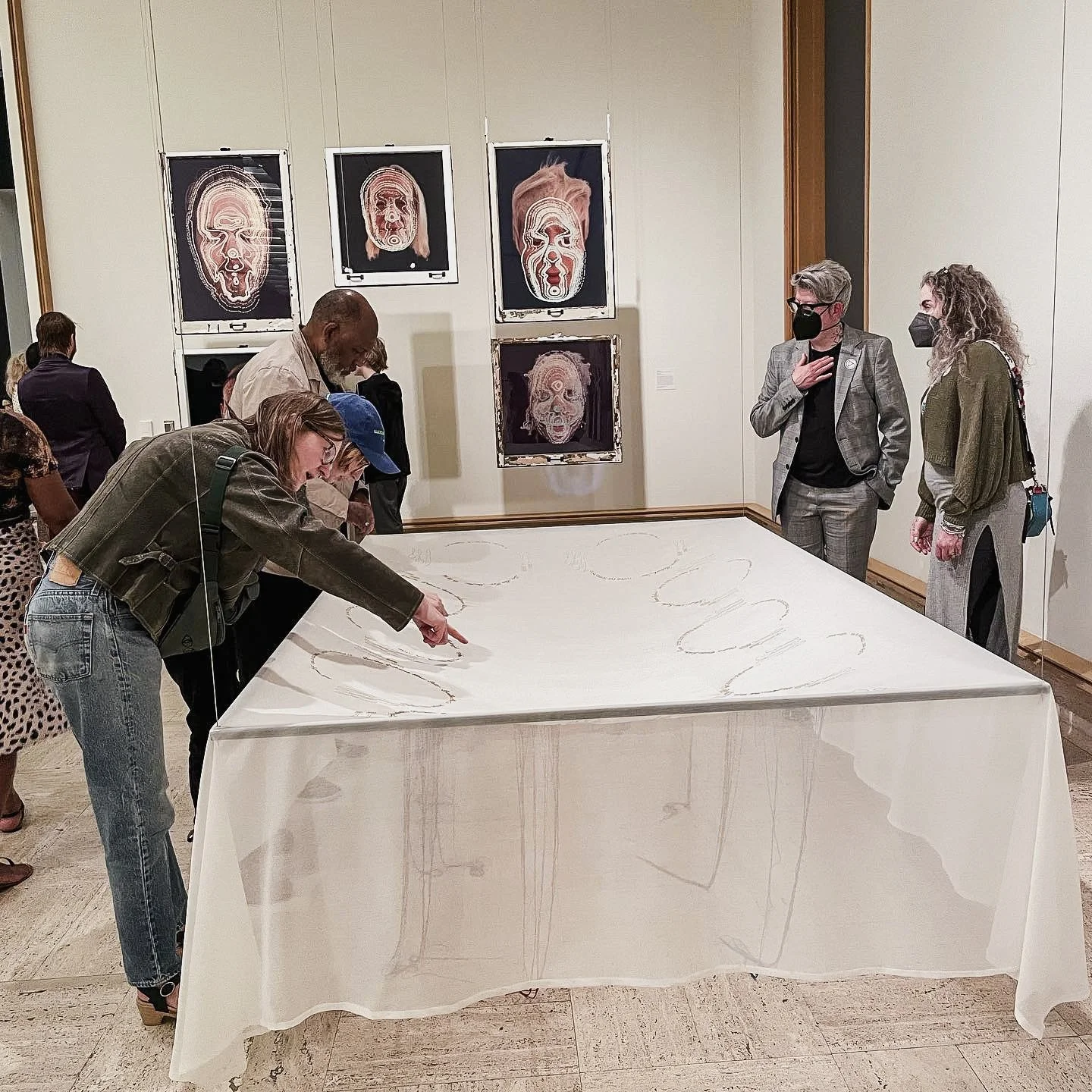
Hand-stitched metallic, silk, and cotton embroidery thread on cloth with steel rod; the presence of my ancestors, many hours, many threads, 8 feet x 5 feet x 30 inches.
*Ushpizot, the feminine of Ushpizin, (“guests” Aramaic, masculine) is a reference to the seven supernal guests, the “patriarchs” of the Jewish people, who visit us each night in the sukkah during the holiday of Sukkot.
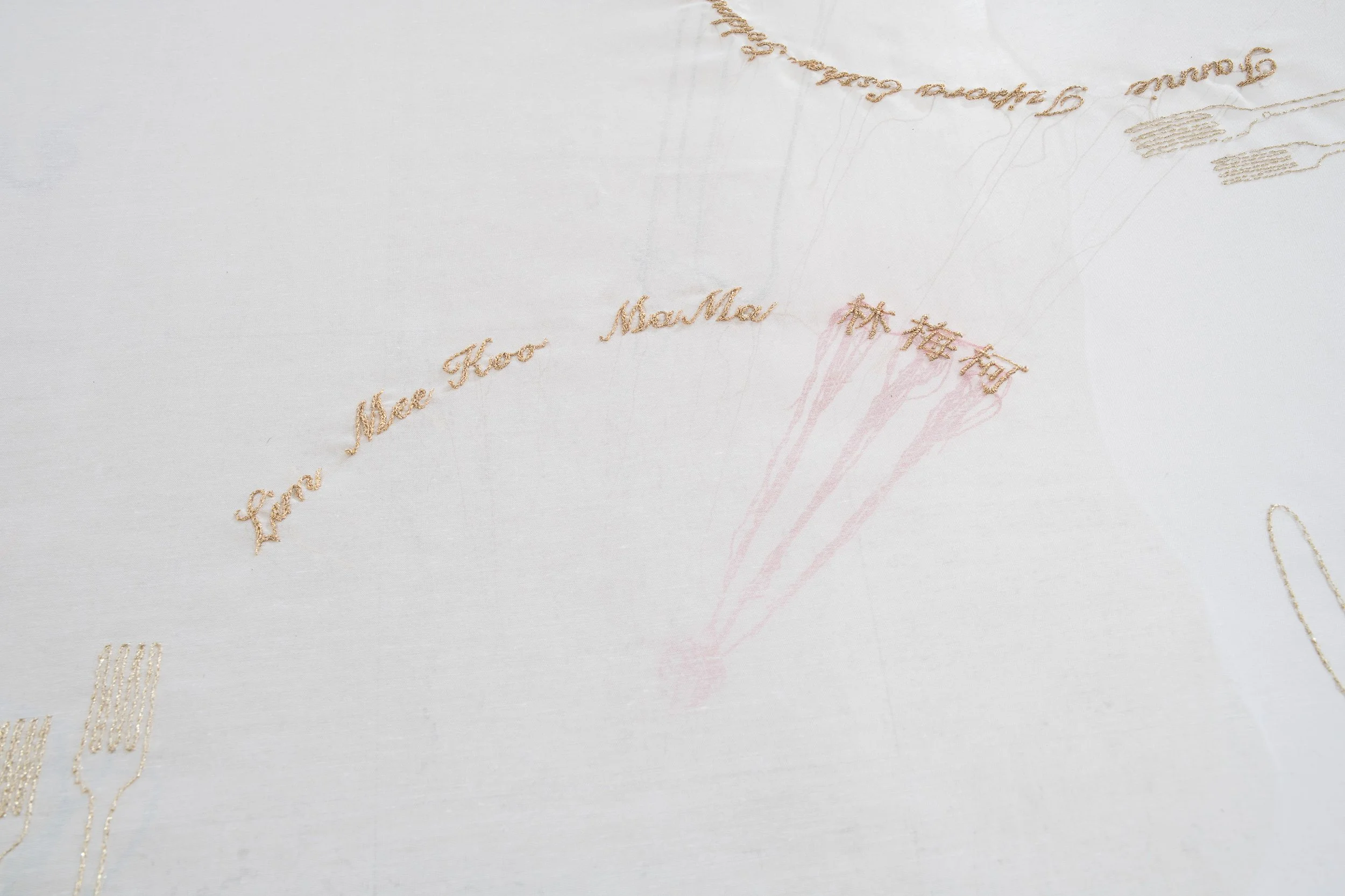
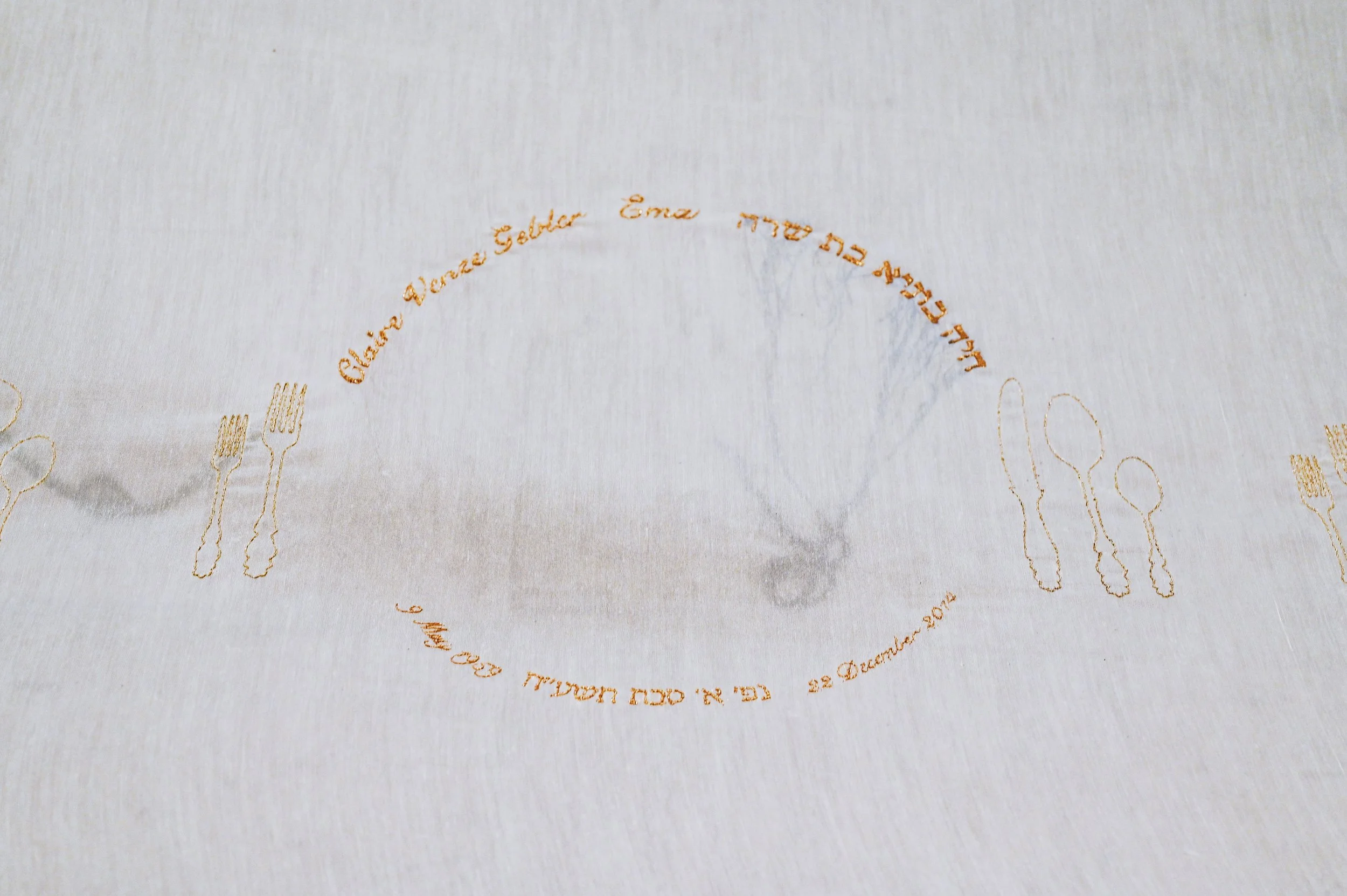
Gathered around this table are my mother, grandmothers, great-grandmothers and great-aunts. Their names, birthdays and yahrzeits are stitched into the fabric as plates, vessels of sustenance. Ten ancestors are seated here. Ten is the number of a prayer quorum in Jewish tradition. What shifts when gathering around the table is regarded as prayer? What ways we can honor and celebrate the memories of ancestors that feel more integrated into daily life?
A tablecloth, a veil of memory.
A dinner table, an altar.
A gathering, an invocation of prayer.
Twisting, stretching, wrapping, pulling,
gathering, tying, knotting, unknotting,
stitching, singing, crying, communing, listening, holding.
Tefilat Nashim, the prayers of women.
Ushpizata Ila’ata, the Exalted Guests.